


Experts weigh in on marketing's redundancy crisis in Age of AI
Tue, 16th Dec 2025
Professional marketers are facing a generational redundancy crisis. At a time where professionals should be looking forward to wrapping up the year, taking a break and spending time with their families over the holidays, anxiety and uncertainty are at an all-time high.
The causes are varied: economic pressure, AI, automation, structural change and new operating models are all playing a role. But regardless of the reason, the experience for those affected is deeply personal.
Several marketing professionals with collective experience spanning multiple decades have provided their thoughts on redundancy, from the structural forces reshaping the industry to the emotional reality of losing a role, from the hidden value of experience in an AI-driven world to practical strategies for rebuilding. Their perspectives offer a guiding light for the industry in a darker time.

Pip Stocks, Director, Pip Stocks Consulting
The redundancy wave happening globally is a structural shift
AI, automation and new operating models are forcing companies to rethink where human value actually sits. Google's restructure that started in January 2023, with more announcements this October about a people-light restructure, is proof that what is emerging is a new type of organisation: leaner, more technical, more fluid and far less layered.
Across other businesses like Meta, Shopify, Atlassian and Tesla we are seeing fewer layers, smaller teams, more automation, young talent stepping into bigger roles, and managers being replaced by tools, dashboards and copilots.
The rise of "fractional wisdom" in the age of AI
When thinking about their redundancy plans, organisations need to treat knowledge as an asset: build internal knowledge bases, use AI to codify past learnings, pair juniors with senior advisors, bring back the wise as experienced guides, and invest in teaching Gen Zs about curiosity, critical thinking and systems thinking.
A people-light organisation is not a human-light organisation. It's one that uses AI to remove friction while elevating human judgment, one that accelerates the capability of its youngest workers while designing smart pathways for wisdom to stay in the system.
The future belongs to organisations that understand this dual mandate: grow the next generation faster, and hold onto the experience that keeps the whole system steady. Those that get the balance right will redefine what effective, resilient work looks like.
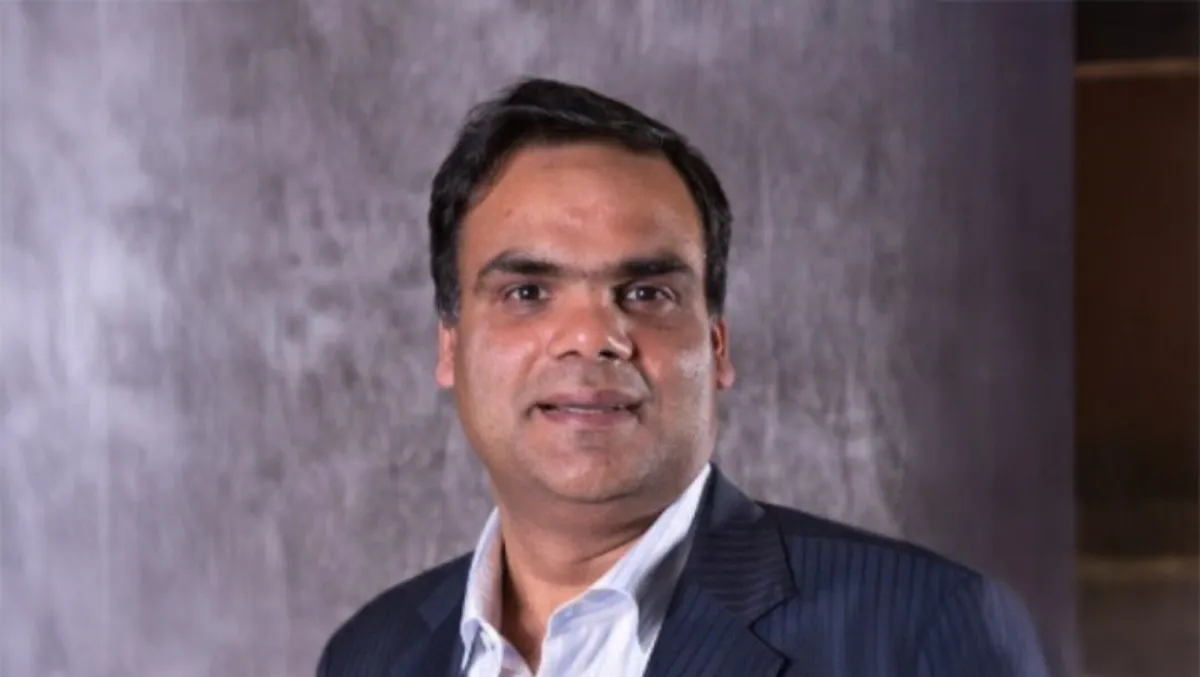
Satya Upadhyaya, Marketing Technology Leader
Redundancy rarely arrives with warning. It comes abruptly, sometimes wrapped in polite language, other times delivered with an air of corporate inevitability. Regardless of how gently the message is delivered, it lands with the same emotional weight: a subtle but unmistakable shift in the ground beneath your feet.
In the last 24 months, I've experienced redundancy three times, and six times in my career overall. Each role was built around solving significant marketing technology challenges: modernising ecosystems, aligning people and processes, integrating data to drive customer engagement. I was brought in to lead transformative change. I was performing exceptionally well. Yet strategic shifts, restructures or leadership changes swept the role away.
This is the paradox of modern work: you can perform exceptionally and still find yourself without a role. Not because of failure, but because of change.
Understanding why redundancy happens
Companies pivot strategy frequently. Market pressures force cost-cutting. Boards rethink priorities. New leaders bring new directions and stop existing initiatives to make way for their strategy. Automation replaces tasks faster than organisations can communicate. You can be exceptional at your job and still be impacted.
Understanding these external forces helped me release the emotional burden. Redundancy did not mean I had miscalculated or underperformed. It simply meant the organisation was undergoing its own transition, and I was no longer part of that chapter.
Educating recruiters about martech, AI and automation
In the weeks that followed, I spoke with many people: colleagues, senior leaders, recruiters, HR professionals, and peers navigating redundancy. Here is what I learned:
Many recruiters are generalists who don't fully understand MarTech, AI, automation or transformation functions. You may end up educating them, and that's okay, because it positions you as an expert.
This is not a slow market. It's a transitional one. Companies are hiring differently: niche skills, industry specialists. Internal referrals and network connections will open more doors than job boards.
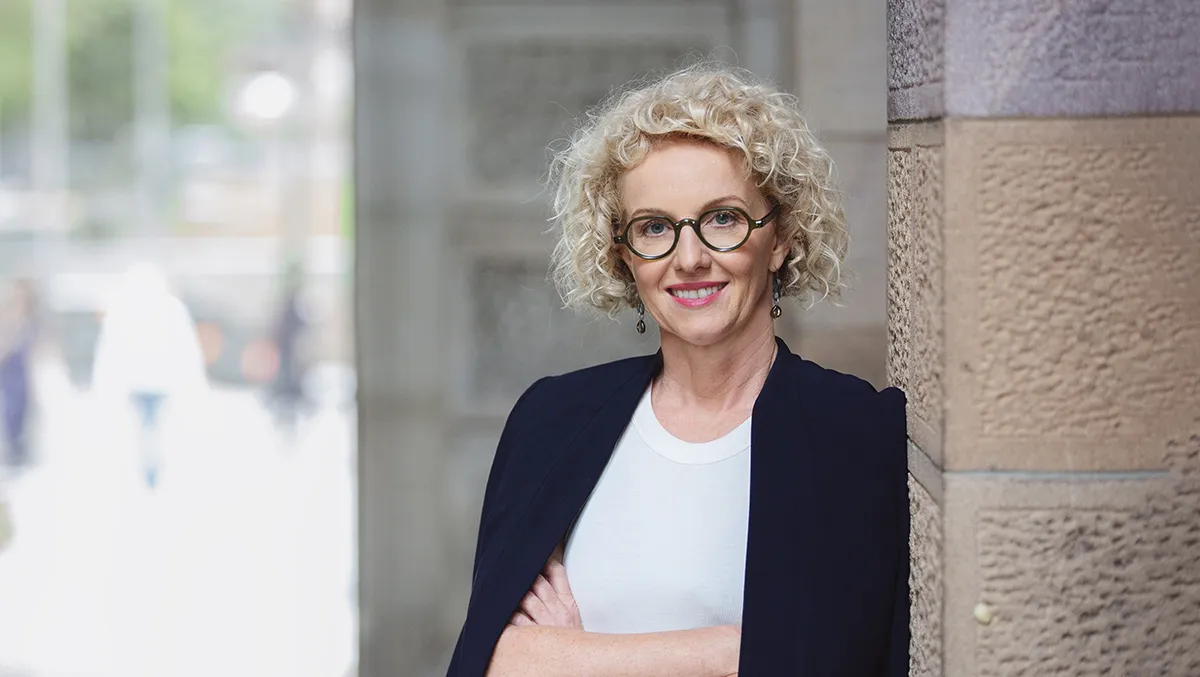
Dr Anna Harrison, Founder, RAMMP
Experience is the new unfair advantage
Yes, redundancy at 40 or 50 feels brutal. But strategically? You're not obsolete. AI can pump out 100 options. You can instantly see which two are worth betting on. That's the difference between work and winning.
AI is fast, magical, and fundamentally blind
Under the hood, systems like ChatGPT are massive pattern-recognition engines doing sophisticated inductive reasoning: learning patterns from an obscene amount of past data, then predicting what's likely to come next. Think of AI as ridiculously fast, generalised pattern-matching with no childhood, no context, no skin in the game.
And now we have a name for that stupidity: AI-generated workslop. Harvard Business Review recently covered research showing that low-effort, AI-generated "looks fine at a glance" content is quietly destroying productivity. Around 40 to 41 per cent of workers say they've received this kind of output: stuff that looks polished but lacks real insight. Each instance costs almost two hours of rework, plus a hit to trust and collaboration.
Your lived experience is the antidote to AI 'workslop'
There is exactly one category of data your AI does not have access to: the deals you've watched fall over for invisible reasons, the campaign that "should" have worked but tanked, the founder meltdown you navigated, the dozens of "this smells off" moments you cannot fully quantify but know are real.
That is non-public data. That is unstructured, emotional, embodied experience. That is the stuff no crawler can scrape.
So if you've been made redundant at 40 or 50? The story is not "I've been replaced by AI." It's "My experience is now too valuable to be wasted on tasks a bot can do."
Fabrizia Roberto, Fractional CMO, Founder, fabriziaroberto.com
Redundancy is a signal, not a verdict
Over the past decade, marketing teams swelled with hyper-specialised roles and micro-functions that made sense in a world of cheap data, predictable ad platforms and limitless content requirements. That world no longer exists. Businesses are now seeking strategic versatility, commercial understanding and leaders who can translate complexity into revenue.
What you hear publicly is that "AI is changing everything." What you don't hear is that AI is exposing cracks that already existed. AI has become a convenient narrative for businesses undergoing long-overdue structural resets. It's easier to attribute cuts to technology than to admit that fragmentation, unclear strategy or poor measurement have been quietly eroding performance for years.
I've lived this twice
The first was during the GFC, when I was still very junior. I had just settled on my first apartment in Sydney. I was on a 457 Skilled Visa and had 28 days to find another valid visa or leave the country. It was terrifying but in hindsight, formative. That redundancy pushed me into roles that expanded my skills, my resilience and ultimately my ambition.
The second time happened much later in my career, at a point where I'd built something I was genuinely proud of. This time, it was the weight of realising that the role I had grown into and the environment around it were evolving in ways that no longer aligned with the impact I wanted to have. Stepping away was difficult and demanded deep, often painful reflection, but ultimately it created the space I needed to pursue the next chapter on my own terms.
Both times, I ended up in a significantly better place. Both times, the catalyst was the same: recognising that redundancy is not a verdict on your talent; it's a signal of misalignment.
A business either no longer has demand for what you do, or it has shifting priorities, constraints or directions that change the nature of the role itself. Either way, it's not a statement about your capability. Your value does not disappear because an organisation cannot or will not use it in its current form.
Redundancy shakes your confidence long before it ever touches your competence.
Experience compounds
You've seen cycles. You've watched technologies rise and fall. You know what creates real growth and what is simply noise. Where early-career marketers see tactics, later-career marketers see patterns. And patterns are what help businesses avoid expensive mistakes.
In this new era, with AI accelerating everything except wisdom, marketers with depth, perspective and adaptability hold an advantage that no algorithm can replicate.
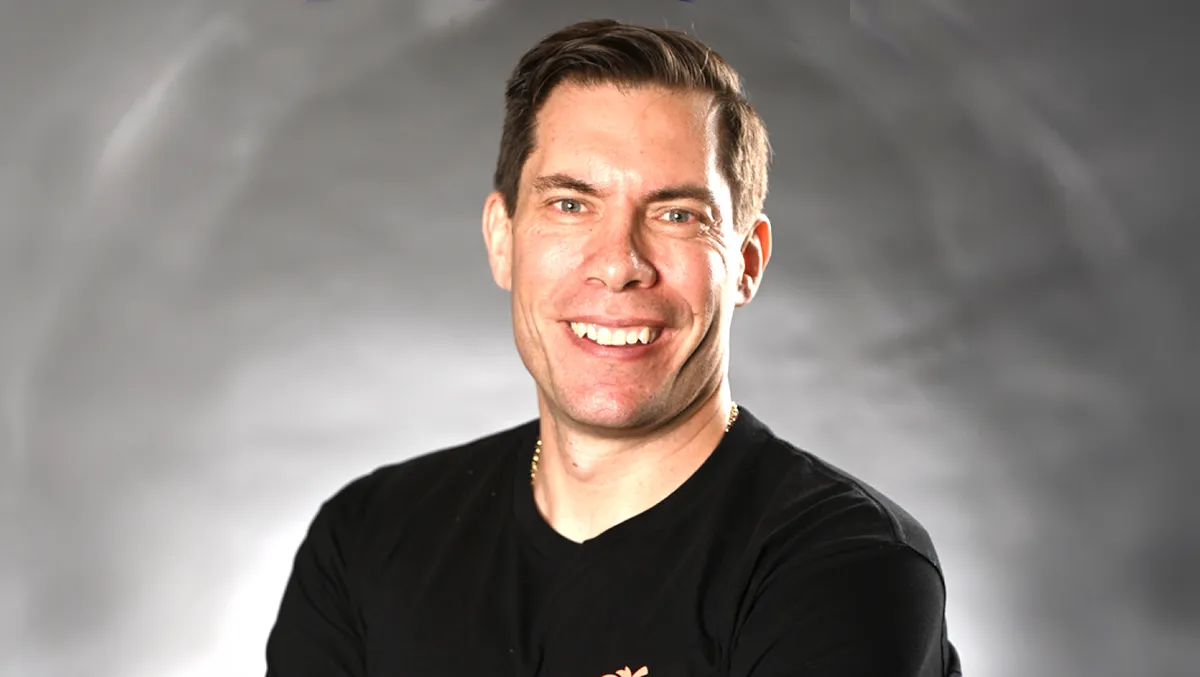
Geoff Main, Marketing Director/Founder, Passionberry Marketing
AI is not a replacement for marketing capability; it's an amplifier of it
Without context, judgment and commercial understanding, AI produces noise. When you remove experienced marketers, you remove the only people who can turn AI output into something strategically sound.
If cuts are unavoidable, protect the capabilities that directly support revenue now: your reach, your distinctiveness and the core parts of your growth loop. These are not marketing luxuries. They are revenue infrastructure.
And if you're a leader focused on short-term outcomes, here's the message: don't cut the parts of the system you don't fully understand. You may be removing the growth you're counting on this quarter.
And to the CMOs out there: it's our responsibility to clearly articulate the impact embedded in both the art (systems, brand, purchasing triggers) and the science (the metrics that matter) of marketing for our C-Suite teams.