

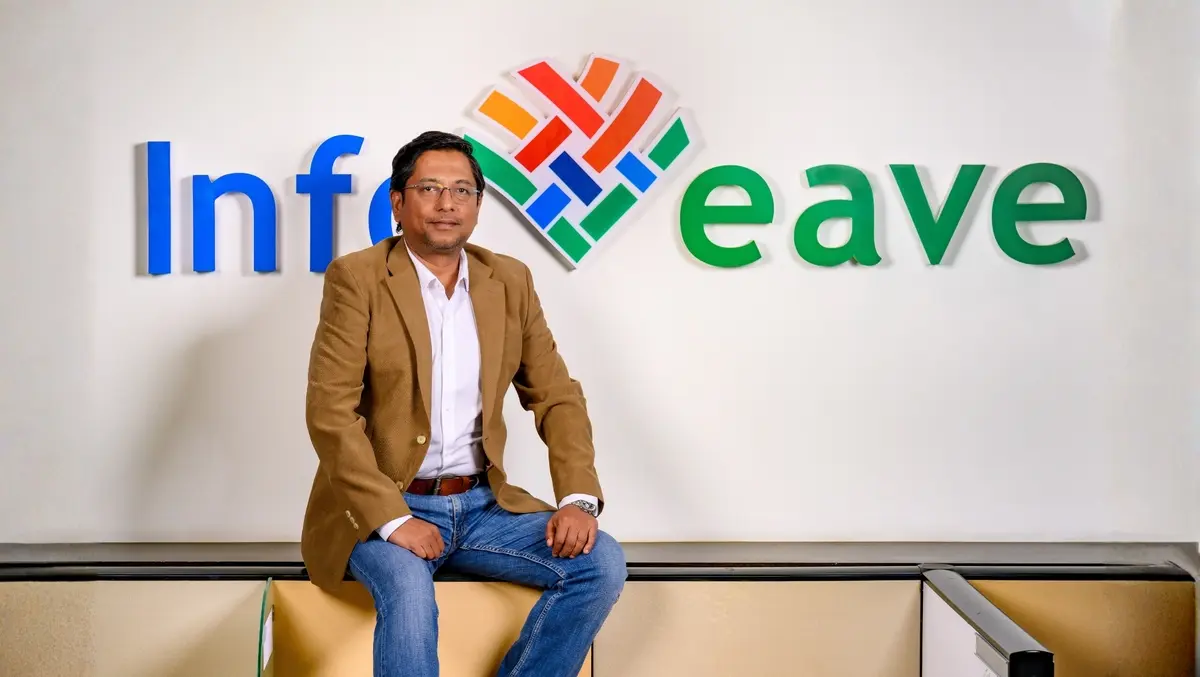
Infoveave launches Fovea AI assistant for enterprises
Fri, 7th Aug 2026.webp)
Infoveave has launched Fovea, an agentic AI assistant for its Unified Decision Intelligence platform, designed to help enterprises make business decisions using governed internal data.
Fovea sits within a platform that combines three layers: data acquisition, data trust and AI-powered reasoning. It is designed to work on an organisation's own enterprise knowledge, including business processes, key performance indicators, policies and relationships, rather than relying on public information.
That approach reflects a broader shift in enterprise AI spending. Many organisations have added analytics tools, dashboards and generative AI systems, but businesses still face fragmented data, uneven data quality and systems that lack the operational context needed to support decisions.
Fovea can be deployed as part of Infoveave's full Unified Decision Intelligence platform or added to an existing data and analytics estate as a reasoning layer, allowing customers to use the software without replacing current systems.
The platform's first layer focuses on data acquisition, using AI to automate data acquisition, workflow orchestration, observability, monitoring and self-healing pipelines to reduce manual work.
The second layer centres on data governance. This part of the system manages data quality, lineage, semantic intelligence and governance so decisions are based on information that has been checked and organised.
The third layer is where Fovea operates. The assistant applies AI to governed enterprise data, business rules and organisational context to recommend what Infoveave describes as the next best action, rather than simply returning answers or producing reports.
Market focus
The launch comes as software suppliers try to position AI tools beyond chat interfaces and content generation. In the enterprise market, vendors are increasingly pitching systems that can support decisions across operations, finance, production, sales and supply chains by drawing on internal data and formal business rules.
Infoveave says demand for that model is rising as companies seek more value from technology investments they have already made. The company argues that many enterprises do not need more isolated tools, but systems that connect existing data sources and apply reasoning in a controlled way.
Industry estimates cited by Infoveave project the global decision intelligence market to grow by nearly USD $50 billion between 2026 and 2030. That projected growth has drawn attention to platforms that combine data management with AI-based recommendation systems.
Company background
Infoveave traces its origins to Noesys Software, an Indian technology consulting and product engineering business founded in 2013. Its experience in enterprise software, data engineering and reporting exposed repeated problems in how organisations handled information spread across multiple systems.
That work led to the creation of Infoveave as a product focused on unifying enterprise data into a governed intelligence layer. Since launching its Unified Decision Intelligence platform in 2020, the company says it has worked with organisations to bring together data across operations, finance, production, sales and supply chains.
Infoveave established itself in Australia in 2023, making the country its first international market. It now describes itself as an Indo-Australian enterprise software company serving sectors including healthcare, logistics, manufacturing and energy.
The company also says its platform can help organisations address data residency, data sovereignty and regulatory compliance requirements while keeping existing analytics and AI environments in place. Those issues have become more prominent as companies weigh how and where to deploy AI systems that process sensitive operational information.
For customers, a practical question will be whether recommendation systems can earn trust inside large organisations, where decision-making often involves competing priorities, regulatory obligations and inconsistent source data. Suppliers in this market are trying to show that AI systems are more likely to be adopted when outputs can be linked to governed data and established business rules.
Sanjoy Raja, Co-founder and Chief Executive Officer of Infoveave, outlined the company's position.
"Our vision has always been to help organisations become independent in Unified Decision Intelligence. Most enterprises already have data. Many even have AI. What they often lack is trusted intelligence that can recommend the next best business action with confidence. By combining reliable data, governed data and AI reasoning in one platform, we're enabling organisations to move beyond dashboards towards intelligent decision-making," said Raja.