

Indian tech leaders call for resilient AI & marketing
Mon, 11th May 2026
Indian technology and marketing leaders marked National Technology Day by calling for innovation that is more resilient, inclusive and rooted in local realities. Across artificial intelligence, digital marketing and B2B software, executives highlighted the need for systems that respond to real-world risks and India's diverse operating environment.
Voices from early-stage AI firms, digital agencies and enterprise platforms pointed in the same direction. They described an ecosystem where data-led decision-making, governance and trust sit alongside creativity and scale.
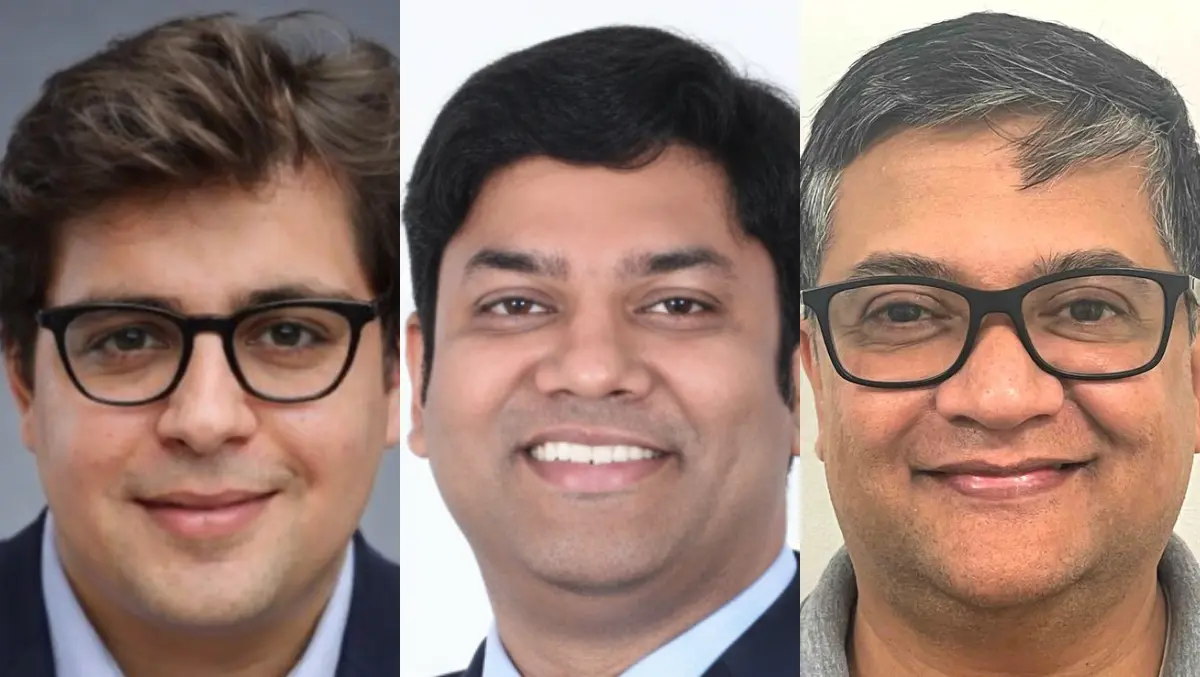
Speaking about emerging risks, Plutas.ai founder Anupam Shrey argued that India's current phase of digital growth demands a different class of systems. He grouped climate exposure, financial access and online trust as strategic priorities for technology planners. His comments reflect a broader shift among Indian founders, who increasingly frame AI not just as a productivity tool but also as an instrument of resilience in volatile markets and environments.
"As India accelerates towards a tech-led future, the real opportunity lies in building systems that are not just intelligent, but responsive to real-world risks. AI and emerging technologies must move beyond efficiency to enable resilience, especially in areas like climate risk, financial inclusion, and digital trust. The next frontier of innovation will be defined by how seamlessly technology integrates into everyday life, ensuring that even the most vulnerable are protected, included, and empowered in a rapidly changing environment," said Anupam Shrey, Founder, Plutas.ai.
Another strand of commentary focused on the deep-tech systems behind seemingly simple user experiences. QRKY.ai founder Anand Basu described the mathematical and AI-driven process behind branded QR codes, a familiar consumer interface that remains a complex design problem for engineers. His remarks underscored how Indian firms are developing proprietary intellectual property in areas that combine combinatorics, image processing and user-centric design.
"National Technology Day reminds us that India's most enduring technology contributions have come from solving familiar problems in mathematically novel ways, and that's exactly the territory we operate in. A single QR code can be rendered in over 2.5 billion mathematically valid block configurations, each of them scannable, but only a handful are aesthetically aligned with a given brand or image. Our proprietary AI evaluates the combinatorial solution space in real time and selects the arrangement that most closely matches the user's chosen image, without ever compromising scannability. The platform is hardware-agnostic, vendor-agnostic, and built to scale from a single artisan merchant to enterprise deployments across millions of touchpoints at a fraction of the operating cost of legacy QR infrastructure. Aesthetics is a deeply personal choice, and our AI is engineered precisely to navigate that subjectivity at scale. This is the proprietary engine that powers the QRKY platform, and it's exactly the kind of deep-tech IP that India's National Technology Day was instituted to celebrate," said Anand Basu, Founder, QRKY.ai.
Marketing leaders used the occasion to outline how these shifts are changing advertising and brand-building. Industry estimates place India's digital advertising market at more than ₹49,000 crore, with further growth expected. Agencies see that scale as both competitive pressure and a rich source of data.
"On National Technology Day, it is worth reflecting on how profoundly technology has reshaped the digital marketing and advertising landscape. Brands today are no longer competing on creativity alone; the real battleground is data intelligence, personalization, and real-time consumer engagement. With India's digital advertising industry having already crossed ₹49,000 crore in FY2025 and projected to reach ₹56,400 crore in FY2026, the momentum is undeniable. AI, automation, and performance-driven storytelling are fundamentally changing how businesses reach and connect with audiences. In our industry, we believe the future of marketing lies in the intersection of technology and human insight, where campaigns are not just creative but measurable and meaningful. As attention spans shrink and digital consumption surges, innovation will remain the defining differentiator for every brand navigating this competitive, digital-first world," said Aditya Kathotia, Founder & CEO, Nico Digital.
B2B providers also outlined how they view the enterprise layer of this transition. Ebix Technologies highlighted its X Pay platform for buy-now-pay-later lending, which uses AI and automation across credit journeys and payment processing. The system supports real-time approvals, card tokenisation and recurring payments while aligning with local regulatory frameworks.
Identity and governance specialist AuthBridge pointed to its AuthLead product for leadership hiring. The platform carries out checks on litigation, financial exposure, integrity and reputation for board and C-suite appointments. The company positions it as part of a wider trend in which digital infrastructure, verification and due diligence are moving deeper into corporate decision-making.
Bengaluru-based Sarvam AI highlighted its work on sovereign AI tools for Indian languages. The startup develops large language models and speech systems that operate across multiple regional languages. It has released a flagship assistant, Sarvam Indus, which supports conversational AI, translation and automation in sectors including banking, agriculture and public services.
Together, these interventions present a picture of an Indian technology sector moving beyond basic digitisation towards more specialised, risk-aware and locally tuned systems in both consumer and enterprise markets.