

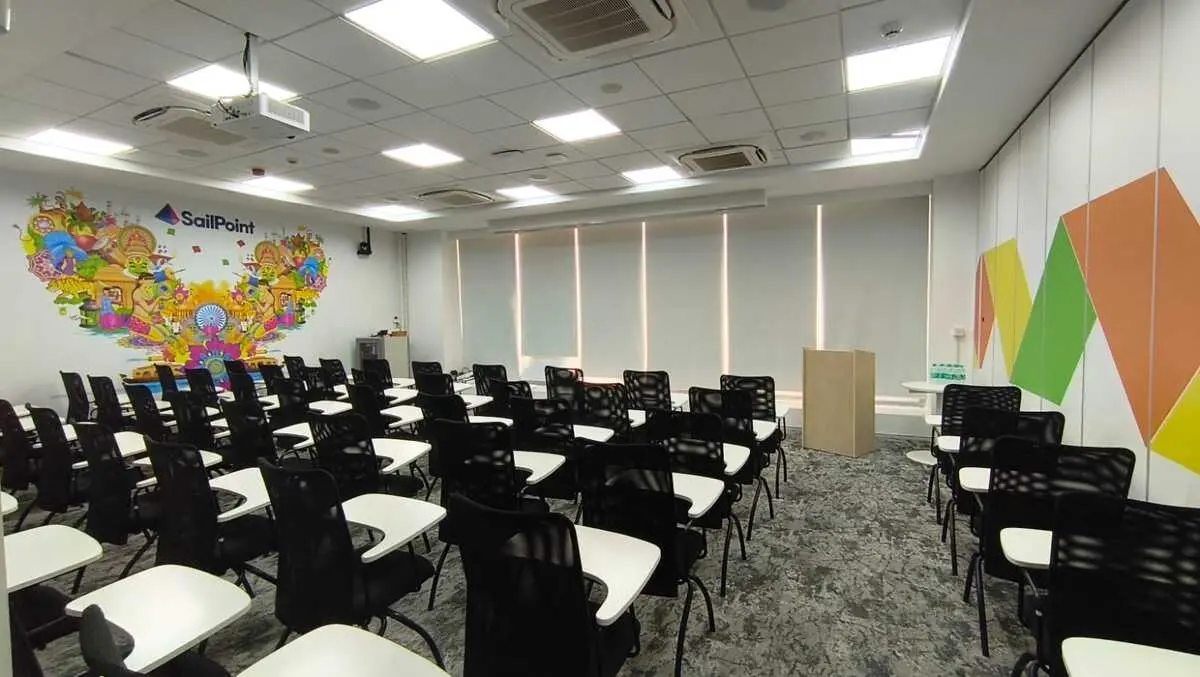
SailPoint installs flexible Kramer AV system in Pune
Tue, 27th Oct 2026 (Today)
SailPoint has installed a Kramer audiovisual system at its Pune office to support flexible meeting room configurations. The setup lets two neighbouring rooms operate separately or as a single combined space.
The project addresses a common workplace need: meeting areas that can switch between small team sessions, hybrid calls and larger internal events without staff having to reset equipment manually.
SailPoint, an identity security company, needed a setup that would give staff in the room and remote colleagues a consistent experience. It worked with SRSG Broadcast India to design and install a system that combines video distribution, audio, USB sharing, wireless presentation and room controls on a dedicated AV network.
Room switching
Users can select Room 1, Room 2 or combined mode through wall-mounted controls or an iPad interface. The system then switches the underlying audio, video, USB and control settings to match the chosen layout.
At the centre of the video system is Kramer's VS-66H2 matrix switcher, which routes video sources to displays across both spaces. Wall plates provide USB-C and HDMI inputs for laptops, while Kramer's VIA Connect3 supports wireless presentation and collaboration.
For signal transport between devices, the installation uses HDBaseT products to carry 4K60 video and control signals over structured cabling. USB extension is also built into the setup, allowing connected devices to keep working as rooms switch between separate and combined use.
Hybrid meetings
Audio design was a significant part of the installation because the rooms are also used for hybrid meetings. Two DSP-62-AEC digital signal processors manage acoustic echo cancellation, automatic microphone mixing and noise suppression, with separate processing logic for divided and combined modes.
Audio is amplified through a PA-240Z unit and sent to ceiling loudspeakers across the spaces. The goal is to maintain even sound coverage in the room while improving intelligibility for remote participants.
The system also uses a SWT3-41-U to allow cameras, microphones and other USB peripherals to be shared between the two rooms. This means users do not need to unplug and reconnect equipment when switching layouts, and it supports bring-your-own-device use with conferencing services including Microsoft Teams and Zoom.
Central control
Control of the overall environment is handled by Kramer's KC-Virtual Brain1 platform. It coordinates room-combine functions, video routing, audio processing and USB management through a centralised system designed to simplify operation for everyday users.
For SailPoint's internal technology team, the dedicated AV network separates meeting room infrastructure from other office systems. The integrated design is also intended to make maintenance and future expansion easier to manage.
The installation reflects a wider shift in office design as employers seek meeting spaces that can support changing patterns of in-person and remote work. Divisible rooms have become common in corporate offices, but they often create technical complications when organisations try to make systems work as one environment in some situations and two independent spaces in others.
Here, the aim was for staff to move between those modes with minimal technical intervention. The design centres on automation, so switching the room layout also changes the associated technology in the background.
"This project demonstrates how intelligent system design and the Kramer ecosystem can transform modern meeting environments into flexible, high-performance collaboration spaces," said Ashish Papadkar, IT Support Specialist at SRSG Broadcast India.
"The seamless room management and centralized control architecture give SailPoint the operational simplicity and enterprise-grade reliability needed to support different meeting formats," Papadkar said.